Orange County homes were not developed with roof solar arrays and 2 electric automobiles in mind. The majority of panels in homes from the 60s through the 90s were sized for gas home appliances, modest air conditioning, and a simpler mix of loads. Fast forward to a driveway with a 48 amp EV battery charger, a 7.6 kW solar inverter on the roof, a heatpump hot water heater in the garage, and you can see the bottleneck. The service devices needs to maintain, not just to prevent annoyance journeys, but to operate securely, satisfy code, and give you room to grow.
I have updated hundreds of panels throughout Irvine, Tustin, Anaheim, Costa Mesa, Objective Viejo, and the beach cities. The discussion constantly starts with the exact same concern: will your existing service handle what you prepare to add without running hot, backfeeding unsafely, or cutting into your headroom for future loads? The response is a mix of mathematics, code, and useful field judgment.
Why the panel is the pivot point for solar and EVs
Think of your electrical service as a highway. The meter and main breaker are the on-ramp, your panel bus is the highway itself, and each branch circuit is a lane that divides off to serve a part of your home. Solar tries to feed power back into the highway. EV charging draws heavy, sustained present at night when the rest of the home is hectic. If the highway is narrow, traffic jams or worse, collisions.
Two numbers matter most: the service score on the primary breaker and the busbar ranking inside the panel. A typical older setup is a 100 amp main breaker with a 100 amp bus. Newer homes frequently have 200 amps with a 200 or 225 amp bus. When you backfeed solar into a panel, the National Electrical Code has guardrails for how much existing you can add to that bus. The panel, simply put, is not just a huge switch. It is a heat sink and a mechanical structure designed to carry existing safely.
In Orange County, another reality is the energy. Southern California Edison owns the service lateral or drop that feeds your meter. If you raise your primary from 100 to 200 amps, it may set off a conductor upgrade on their side, mast work, a brand-new meter socket, or trenching if you have an underground lateral. Coordination with SCE and the regional structure department is a big part of the timeline.
The 120 percent guideline, center-fed panels, and why your PV style keeps bouncing
Most solar plans kick back and forth over the 120 percent guideline. In plain language, NEC 705.12 allows the sum of your primary breaker plus the solar breaker to be approximately 120 percent of the busbar ranking when the solar breaker is at the opposite end from the main. On a 200 amp bus, 120 percent offers you 240 amps of total overcurrent gadgets. If you keep the primary at 200, your solar breaker can be 40 amps. With a 7.6 kW inverter, that is typically enough.
It gets untidy with 100 amp devices. A 100 amp bus times 120 percent equates to 120. If your main is 100, your solar breaker is limited to 20 amps. That caps the AC output of your inverter https://emiliojttk329.tearosediner.net/24-7-emergency-electrical-repair-work-orange-county at 16 amps, about 3.8 kW, not a meaningful balanced out for many families. Individuals attempt to shave the main down to 80 or 90 amps to get space for a larger PV breaker, however then you run short on house capability. It is a poor compromise if you prepare to charge an EV.
Another typical headache is a center-fed panel, typically seen in older meter-main combos where the primary breaker beings in the middle of the bus with areas above and listed below. In that design, you can not position the solar breaker at the opposite end, which revokes the 120 percent allowance. Workarounds may include a line-side connection with energy approval, a dedicated PV-ready meter-main with a solar landing, or a supply-side meter socket with an external air conditioner disconnect. The right option depends upon your utility, panel listing, and the Authority Having Jurisdiction. In my experience, many Orange County inspectors choose a compliant bus estimation or a noted solar-ready meter-main over field taps that are tough to inspect.
The 2020 and 2023 code cycles included more clearness to energy management and busbar security. If your solar installer pushes a style that looks like a kludge to require fit a 10 kW range into a 100 amp panel, ask a licensed electrician in Orange County to propose a correct meter-main or panel replacement. The fastest solar affiliations I see take place when the service upgrade and PV plans are collaborated from day one.
EV charging loads are not like a dryer
A normal Level 2 EV battery charger works on a 240 volt circuit. Nameplate continuous loads prevail. For instance, a 48 amp charger requires a 60 amp breaker and 6 gauge copper. A 40 amp charger requires a 50 amp breaker with 8 gauge copper. The present runs for hours throughout peak home use times, not simply put bursts like a microwave or trash disposal.
The code deals with continuous loads seriously. We size breakers and conductors at 125 percent of the battery charger's continuous present. 2 EVs can stack up quickly. Include cooling, a pool pump, and cooking, and a 100 amp service becomes a constraint. Even a 200 amp service can struggle if you move toward a fully amazed home with heatpump HVAC and water heating.
There are load management solutions. An EV Energy Management System can throttle charging when your home draw crosses a set limit, maintaining the total service rating without upgrading. Some items, like the DCC-10 or panel manufacturer's load-shedding modules, monitor the main conductors and dynamically allocate existing to the battery charger. California inspectors are increasingly familiar with these, and NEC 625.42 addresses EV energy management. For families with one EV, a single-stage load management device might be sufficient. For 2 EVs plus solar and a brand-new heatpump, a 200 amp meter-main with space for a future subpanel is the smarter long-lasting play.
How to know you require a panel upgrade before solar or an EV charger
- Your primary breaker is 100 amps, and you want a solar system larger than 4 kW or a 40 to 60 amp EV charger. The panel is a split-bus or center-fed style without any devoted main breaker at the top or bottom. There are no complimentary breaker spaces, or you currently have numerous tandem breakers jammed into spaces not noted for twins. The panel brand is on recall lists, or has a credibility for poor journey efficiency and hot bus stabs. The utility meter socket is dated, corroded, or does not meet present utility specifications for meter-main clearance and working space.
On service calls, I also search for subtle ideas: breakers with discolored deals with, swelter marks on the deadfront, aluminum conductors with antioxidant paste that has actually run dry, or water tracks in the enclosure from a leaky mast head. Beach-adjacent homes in Dana Point and Newport frequently reveal salt rust around the meter ring. That is not something to overlook when you prepare to press more existing through the system for the next twenty years.
Picking the right amperage and devices for Orange County homes
For most single-family homes here, 200 amps is the brand-new standard. It covers a mid-size PV selection, a 50 to 60 amp EV circuit, modern-day heating and cooling, and still leaves headroom. If you are constructing an ADU, planning 2 EVs, and considering a heatpump hot water heater, I typically recommend a 200 amp meter-main with a 225 amp bus to gain that 40 amp PV slot under the 120 percent rule. If you want two high-capacity EV chargers and all-electric devices, a 320 amp continuous-duty service with double 200 amp panels is worth the upfront work. It is not a fringe option anymore.
California homes frequently have a UFER ground tied into the foundation rebar. Updating the service is the right moment to validate that connection, re-bond the water piping within 5 feet of its entry, and set up a driven rod if needed by the inspector. I also include a Type 2 rise protective device at the service. With rooftop solar and sensitive electronics, a quality SPD makes its keep.
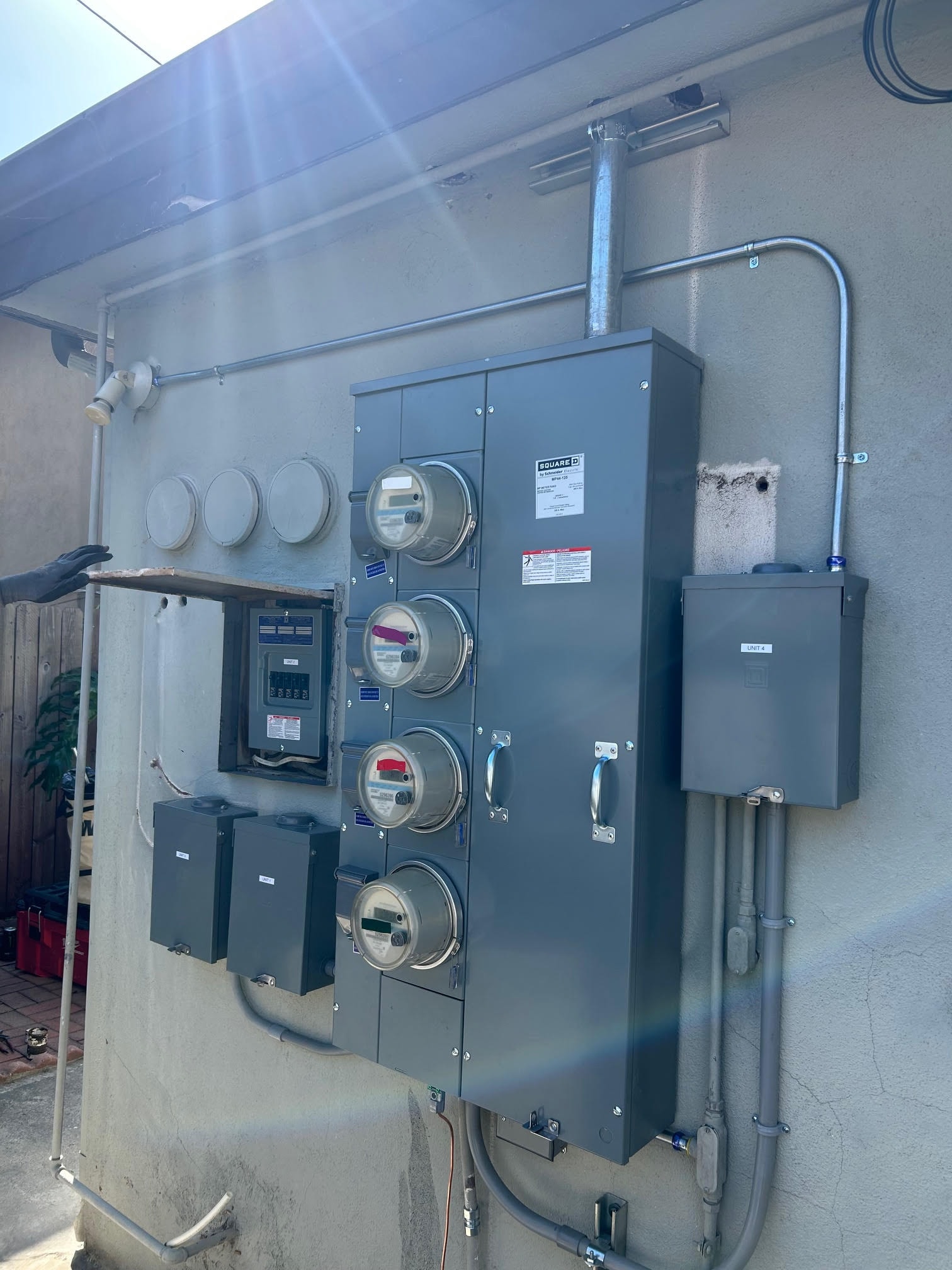
Enclosures matter. For exterior meter-mains in seaside zones, I spec NEMA 3R with a robust powder coat and stainless hardware. On south and west direct exposures, a shade panel keeps the devices cooler and lengthens the life of the breakers and meter socket seals. Good Orange County electrical contractors think about weather, salt air, and stucco repair work as part of the scope, not as punch-list surprises.
The upgrade process, begin to finish
- Load examination and website walk: We validate existing service size, bus ranking, grounding, readily available breaker areas, and proposed new loads. A correct load calculation, not guesswork, drives the design. Permitting and energy coordination: We submit strategies to your city and coordinate with Southern California Edison for meter release, shutoff, and any service lateral upgrades. If the lateral is underground, we verify trenching obligations and depth. Installation day: Power is down while we switch the meter-main or panel, reroute feeders, land neutrals on an isolated bar, bond the grounds, set up a rise protector, and torque lugs to spec. We identify everything clearly and take pictures for the inspector and for your records. Inspection and meter set: The city or county examines. Once signed off, SCE reinstalls the meter or re-energizes the lateral. Many homes are back up same day. Complex trenches or weather delays can add time. Solar and EV combination: We land the PV breaker at the right end of the bus, size conductors for the inverter, set up the EV charger, and program any energy management device. Then we validate function and run-load tests under genuine conditions.
When crews are experienced and the permit is tidy, a basic 200 amp panel replacement in Orange County is normally a single-day blackout. For homes needing brand-new mast work through a tile roofing, stucco cut and patch, or a service lateral upgrade, two to three days is common.
Permits and inspectors: what to expect in Orange County
Cities like Irvine and Objective Viejo turn permits around faster than some coastal jurisdictions, however you must still prepare for a week or 2 for standard panel upgrades. If you are matching the work with a solar permit, the review gets more involved. Lots of structure departments want clear one-line diagrams, meter-main model numbers, bus rankings, and site images that show working clearances: 30 inches of width, 36 inches of clear depth, and 6.5 feet height.
If your devices is inside a garage, inspectors may request for bollards to protect it from automobile effect, or for arc-fault and ground-fault security to be upgraded on new branch circuits extended from the panel. Outside working space also matters. I have needed to relocate enclosures because hedges and swimming pool equipment crowded the clearance zone.
SCE coordination can be the pacing item. For overhead services, mast height and weatherhead clearances need to meet energy spec sheets. For underground services, trenching depth, channel schedule, and pull strings are checked by SCE or the city before backfill. A great local electrical expert in Orange County will not guess at utility guidelines. We send and get pre-approval to decrease surprise change orders.
What it costs and why the variety is wide
Homeowners ask for a single number. The truth exists are tiers.
A simple 200 amp panel replacement without any utility upgrade and a like-for-like meter-main usually lands around the lower thousands. Expect a variety from roughly 3,500 to 6,500 depending on brand, SPD, stucco repair work, and permit charges. If the service conductors from SCE must be upsized, or if the meter needs to move for clearance or code, the scope leaps. Including a new mast through a tile roof, cutting and patching stucco, or trenching for an underground lateral can press the task into the 7,000 to 12,000 range. If you step to a 320 amp service with dual panels, it often climbs beyond that, specifically when coupled with a new subpanel for an ADU.
Solar and EV integration includes variables. A line-side solar connection with an individually installed air conditioning detach may cost more in labor and hardware than a tidy bus-fed breaker in a solar-ready meter-main. EV runs to separated garages, long conduit paths, or panel locations that require coring and firestopping add product and time. The very best method to avoid spending plan creep is a combined strategy: one Orange County electrical contractor creating the service upgrade with the solar interconnection and EV charger setup in mind.
Prices also reflect craftsmanship that you will not see however will feel years later. Proper torqueing of lugs avoids locations. Proper anti-oxidant application on aluminum conductors avoids creep. Clear labeling and a cool rain gutter design make future upkeep and electrical troubleshooting easier and faster. Spending a bit more for a leading rated electrician in Orange County who does these things is cheaper than a future emergency electrical contractor go to on a sweltering Saturday.
Alternatives when a complete upgrade is not ideal
Sometimes the panel is boxed in by property lines, HOA visual appeals, or masonry. Maybe you are in a historical district in Orange that frowns on outside changes. There are workable courses that do not include a complete meter-main replacement.
- Load management: Devices that monitor main conductors and shed EV charging when the home load spikes above a limit preserve a 100 or 125 amp service while allowing a 40 to 48 amp electrical automobile charger. Solar-ready subpanels and bus sizing: If you already have a 200 amp main with a 225 amp bus, reorganizing loads and moving high-draw breakers to the opposite end from the main can make room for a 40 amp PV breaker under the 120 percent rule. Smart panels: Systems from Span, Schneider, and Leviton use circuit-level control and dynamic load shedding. They cost more upfront however can defer a full service upgrade and add clever home wiring abilities for future electrification. Supply-side taps with utility approval: In choose cases, a noted meter socket adapter or a tapped service conductor connection for PV can be utilized. This needs energy and inspector positioning and must follow listing and torque specs to the letter.
Each choice has trade-offs. A fast fix that satisfies a single EV today may hem you in when you add a heatpump in two years. This is where a skilled property electrician in Orange County earns their keep, by weighing not just today's set up however the arc of your home's electrification.
Safety and craftsmanship information that make a difference
On the surface area, a panel upgrade is a glossy brand-new box and fresh breakers. Inside the information matter. I have actually opened panels a couple of months after a budget install to find loose neutral bars, mis-landed premises, and drywall dust loaded into the enclosure. Those are not harmless. Here is what I consider non-negotiable:
- Grounding and bonding that meets current code, including UFER verification, water and gas bonding with proper clamps, and separation of neutral and ground in subpanels. A listed whole-house rise protector installed at the service, with conductors kept short and straight to reduce impedance. Anti-corrosion measures appropriate for the site: silicon around stucco penetrations, sealed meter rings, stainless screws in coastal zones, and drip loops that really drip far from enclosures. Clean labeling, circuit directories that match truth, and panel schedules that include future-reserved spaces for solar or EV expansion. Torqueing breakers and lugs to manufacturer specification, with a printed log. It sounds picky up until you see what a hot lug does to a bus in August.
When we add an EV circuit, the same standards use. Channel support spacing, pull box preparation on long runs, GFCI requirements where suitable, and clear signs on disconnects all shape how an installation behaves under real-world use. A best-in-class electrical contractor near me in Orange County will deal with these as routine, not as extras.
Integrating solar, storage, and backup
Many homeowners set EV charging with solar and later include batteries. Storage alters the calculus a bit. Hybrid inverters and battery systems often desire their own feeders and disconnects. Some panels need a devoted backup loads subpanel to isolate critical circuits during an outage. If you prepare for storage, pick a meter-main and panel layout that accommodates it: knockouts in the best places, booked breaker spaces, and working clearance for future disconnects and combiner boxes.
For whole-home backup with a generator or big battery inverter, service equipment frequently requires a service-rated transfer switch. Integrating a generator installation with a PV-ready service needs cautious attention to transfer switch rating, neutral changing, and grounding. Commercial electrical contractor experience helps here, since the logic of selective coordination and source switching is the very same whether you are backing up a restaurant walk-in or a home office.
Commercial notes for small businesses in OC
If you run a small company out of a Tustin flex area or a Costa Mesa storage facility and want to install employee EV charging or roof solar, panel capacity and service entrance ranking will drive the project. Business services frequently run 208Y/120 or 480Y/277 volts. Adding a set of 80 amp Level 2 chargers can tip a lightly packed 225 amp panel over the edge during the workday. A business electrician in Orange County can carry out a demand load study utilizing genuine interval data where available, or set up handled charging that spreads require throughout shifts. Coordination with your property owner and the local utility is frequently more intricate than the physical work, so plan for that timeline.

Code updates and the Orange County permitting climate
The 2020 and 2023 NEC cycles brought clarity to energy management systems, GFCI growth, and quick shutdown for PV. Orange County jurisdictions vary in their adoption schedules, but inspectors are regularly mindful to the basics: clear working space, appropriate conductor sizing and derating, and identified disconnects. Egress and height rules for outside equipment along sidewalks matter in denser neighborhoods. If your panel faces a public method, installing height and door swing clearances might drive a relocation.
Irvine, Anaheim, and Santa Ana all anticipate a licensed electrician in Orange County to hold the authorization and be on site for crucial work. That is not red tape. It is how the cities make sure the person making decisions about your service understands the code and carries the liability. House owners sometimes request for an exact same day electrical expert to squeeze in a fast EV charger without authorizations. That is a brief road to issues with resale, insurance, and security. A respectable Orange County electrical contractor will not skip permits.
What happens after the upgrade
A well-executed upgrade silently allows you to forget about it. That said, I recommend a simple check each year: open the deadfront with the main off, look for indications of wetness, rust, or discoloration, verify that labeling is still readable, and vacuum out spiderwebs. If you are not comfortable doing that, set up an electrical assessment in Orange County every number of years. We typically combine it with routine electrical repair work, outlet installation, lighting setup or recessed lighting upgrades, and outdoor lighting upkeep. If something goes wrong at 10 pm in a storm, a 24 hour electrical expert in Orange County who understands your equipment makes the call easier and faster.
For property owners with older branch wiring, a service upgrade is the time to think about partial or entire home rewiring. Aluminum branch circuits from the 60s and early 70s, knob-and-tube found in additions, or shared neutrals that do not play well with AFCI breakers are best fixed when the panel is open and crews are currently on website. It might cost a bit more now, however it saves duplicated journeys and patching later.
Smart home circuitry and low voltage wiring also fold well into this window. If you want energy tracking, committed circuits for networking gear, or tidy pathways for PoE cams, laying conduit and home runs while we are working on the service produces a neat installation.
Choosing the right partner
Searches for electrician Orange County CA or regional electrical contractor Orange County return a long list. Price matters, but so does the team's track record with your city and with SCE. Request for:
- A clear one-line diagram revealing your proposed meter-main, panel bus score, solar breaker position, and EV circuit sizing. Proof of license and insurance, plus examples of current electrical panel upgrade projects in your jurisdiction. A schedule that represents utility coordination, not just the installation day. A scope that consists of grounding, rise defense, labeling, and stucco or drywall repair work, not simply a panel swap.
Most property owners desire a budget friendly electrical expert who does not cut corners. The very best electrical contractor is the one who prepares well, communicates clearly, and leaves you with a system that an inspector, a future professional, and your insurance carrier will all respect. If you are comparing quotes, look past the line items. A leading rated electrician in Orange County will earn their number in the details.
A last word from the field
A household in Lake Forest called last summertime. They had a 100 amp center-fed panel, a new 7.6 kW solar quote, and a Tesla on order. The solar company proposed dropping the main to 70 amps to fit a 40 amp PV breaker. That would have tied their hands whenever they cooked, did laundry, and ran AC on a hot evening. We switched in a 200 amp solar-ready meter-main with a 225 amp bus, set up a whole-home rise protector, and ran a 60 amp EV circuit with an energy management module. The city inspector valued the tidy design. SCE re-energized the very same afternoon. When they added a heat pump hot water heater this spring, there was nothing to renovate, simply a new breaker and a neat run of conduit. That is how you want it to go.
If you are staring at a crowded panel and a set of enthusiastic electrification objectives, begin with a correct plan. A certified electrical expert in Orange County can examine your service, size your solar and EV additions correctly, and deliver a panel replacement that is safe, code-compliant, and all set for what comes next.